Lei Feng Hat: Origin, History and How It Differs from the Ushanka
← Back ▾Lei Feng hat origin
📖 ARTICLE
Lei Feng hat, Russian hat, ushanka: one family, different stories.
Lei Feng Hat Origin: From the PLA Type 55 Winter Cap to the Russian Ushanka
Lei Feng did not invent the Lei Feng hat! It was the PLA's Type 55 winter cap, named after the soldier who wore it in famous photos, and its design comes from the Soviet ushanka. A timeline and comparison table explain the origin, anatomy, ways to wear it and how to choose one.
Last updated: 27 October 2026 · Lei Feng hat · Lei Feng hat origin · ushanka · what is an ushanka · ushanka history
The short answer: why is it called the "Lei Feng hat"?
Lei Feng did not invent the Lei Feng hat. In Chinese, "Lei Feng hat" (雷鋒帽, *Léi Fēng mào*) originally meant the winter cotton cap of the Chinese People's Liberation Army's Type 55 uniform. Lei Feng, a young soldier who became a national role model in 1960s China, wore that cap in his most widely printed photos. People saw the furry front flap and fold-down ear flaps and thought of him, so the nickname stuck.
That army cap, in turn, was clearly inspired by the Soviet winter hat known as the ushanka (ушанка). That is why, across the Chinese-speaking world today, "Lei Feng hat" is often used for any fur hat with ear flaps: a Russian hat, a trapper hat, an ushanka.
Strictly speaking, though, the historical Type 55 army cap, the traditional Russian ushanka and today's fashion ushanka are three different things. They look alike, but their era, purpose and materials differ. This guide sorts them out.
FAQ
Why is it called the Lei Feng hat?
"Lei Feng hat" originally meant the winter cap of the PLA's Type 55 uniform. Lei Feng, promoted as a role model in 1960s China, often wore it in his most widely printed photos, so people associated the cap with him and the nickname spread.
Did Lei Feng invent the Lei Feng hat?
No. He was simply photographed wearing it. The army cap's design borrowed from the Soviet ushanka, and fur hats with ear flaps existed in cold northern regions long before that.
What is the difference between the Lei Feng hat and the ushanka?
They look alike and share history, but they are not the same hat. The Lei Feng hat mainly means the Chinese army winter cap of the 1950s and 60s; the ushanka is the Russian ear-flap hat adopted by the Soviet army from 1940; most hats sold today are fashion pieces inspired by the classic shape.
What does the name ushanka mean?
It comes from the Russian word for ears, ushi (уши), and means "the hat with ears": an ear-flap hat.
Why does an ushanka have ear flaps?
Ears are the part of your head that feels the cold first. Lowered and fastened under the chin, the flaps block side winds and cover your jaw; on milder days you can tie them on top as a style detail.
How do you style an ushanka?
Tie the flaps on top for the sharpest look; it works with coats, leather jackets, work jackets and puffers. Black and dark grey go with everything, cream and light brown feel softer and more vintage, pink is cute, and the red-star version is closest to the classic Lei Feng hat.
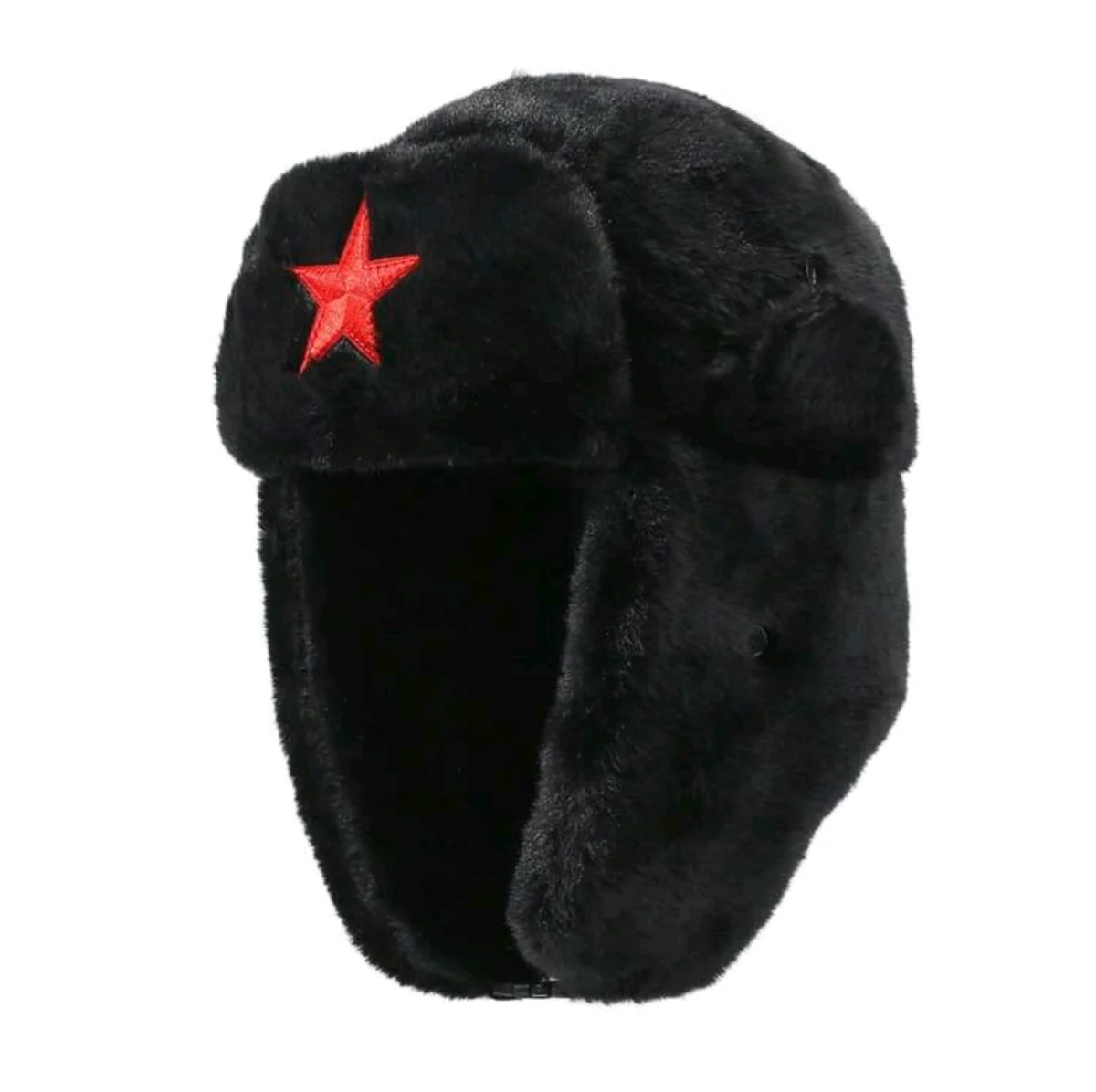
The red-star version is closest to the classic image of the Lei Feng hat. (MOFFLI LABS product photo; a modern fashion hat, not a historical army cap)
Who was Lei Feng? A 22-year-old army truck driver
When
What happened
December 1940
Lei Feng is born in Wangcheng, Hunan (today part of Changsha). He loses his parents as a child.
January 1960
He joins the People's Liberation Army as a truck driver; his unit is stationed in Fushun, Liaoning.
1960–1962
He leaves behind diaries and many photos; in the winter shots he usually wears the army-issue winter cap.
15 August 1962
He dies in an accident on duty, aged just 22.
5 March 1963
Mao Zedong's inscription "Learn from Comrade Lei Feng" is published; 5 March later becomes "Learn from Lei Feng Day" in mainland China.
Lei Feng served in China's northeast, where winters are bitterly cold, and the cap he was issued belonged to the Type 55 uniform system. His photos were reprinted again and again on posters, in textbooks and in newspapers, so for many people "that army cap with the fur front and ear flaps" simply became "the hat Lei Feng wore."
The story behind the name is really about the power of a set of photographs: Lei Feng did not design the hat, but because of him it got its own name in the Chinese-speaking world.
The Type 55 winter cap: the original "Lei Feng hat"
In 1955 the PLA introduced new uniforms alongside its new system of military ranks. A report on the rank uniforms was approved at a State Council meeting that September, and from 1 October the whole set was officially called the Type 55 uniform. It was strongly influenced by Soviet uniforms of the time, and its winter cap clearly borrowed from the Soviet ushanka.
According to features by CCTV's military channel and China Military Online, the cap had several clever details for keeping warm:
A furry front flap: blocks wind blowing straight into your face.
Ear flaps on both sides: fold up, or drop down to block side winds.
A longer back flap: when lowered it meets the coat collar, so no cold air gets down your neck.
A padded crown: the top has no fur, but a layer of cotton padding keeps melting snow from soaking through.
A chin strap: tie the ear flaps under your chin for maximum warmth.
The cap badge: a red star on the front. Badges changed over the years; for example, the "Type 65" uniform introduced after ranks were abolished in 1965 used an all-red star.
Good to know: the Type 55, Type 65 and later PLA winter caps differ in badge, materials and colour, so they should not be lumped together. When people say "Lei Feng hat," they mainly mean the army winter cap of Lei Feng's era, the 1950s and 1960s.
What is an ushanka? Russian for "the hat with ears"
The word ushanka comes from the Russian word for ears, *ushi* (уши). It literally means "the hat with ears," in other words an ear-flap hat. Its signature feature is the pair of ear flaps that can be folded up, tied on top or let down.
The ushanka became a military hat because of a very cold war:
The Winter War, 1939–1940: the Soviet Union fought Finland in extreme cold, and the Red Army's old *budenovka* cap gave almost no protection.
The Finnish fur cap: Finnish troops were already wearing fur caps with ear flaps (the 1936 and 1939 *turkislakki* models).
1940: the Red Army began adopting the ear-flap winter hat as standard issue, gradually replacing the budenovka. Officers usually got real fur, while soldiers got synthetic pile nicknamed "fish fur" (*rybiy mekh*). Fish, of course, have no fur, which is the joke.
Go back further and you will find that fur hats with ear flaps are much older: the traditional Russian treukh (треух), the fur hats of Mongolian and Siberian nomads, the fur caps of China's northeast. People in cold regions refined this survival design over a very long time. The ushanka is simply the version that was standardised and became recognised worldwide.
Lei Feng hat vs. Russian ushanka vs. modern ushanka
Compare
Lei Feng hat (Type 55 army cap)
Traditional Russian ushanka
Modern fashion ushanka
Era
From the 1950s–60s
Soviet army winter hat from 1940, still worn by civilians
Today's everyday style hat
Purpose
Standard winter issue for the Chinese army
Military use and everyday cold-weather wear
Warmth, winter styling, travel
Look
Mostly army green, red star badge on the front
Grey, black, brown; military versions carry a badge
Many colours; badge optional
Materials
Cotton fabric, cotton padding, pile fur
Real fur or synthetic "fish fur"
Usually faux fur, polyester and other synthetics
Ear flaps
Fold up or down; tied with a chin strap
Tie on top or fasten under the chin
Depends on design; most keep fold-up, fold-down flaps
So the "Lei Feng hat" and the ushanka belong to the same family: similar look, shared history, but not the same hat. The Lei Feng hats you can buy today are mostly fashion pieces inspired by the classic shape, not originals or replicas of historical army caps.
The many names of this hat
The same style goes by many names, so it helps to know them when searching or shopping:
Ushanka / shapka-ushanka: the Russian name; *ushi* means "ears."
Russian hat / Russian fur hat: named after the country most associated with it.
Trapper hat: the common English term.
Aviator hat: early pilots wore similar leather hats with ear flaps.
Ear-flap hat: named after what it does.
Lei Feng hat (雷鋒帽): the most common name in the Chinese-speaking world, from Lei Feng's photos.
Anatomy of an ushanka: crown, ear flaps, front flap, ties
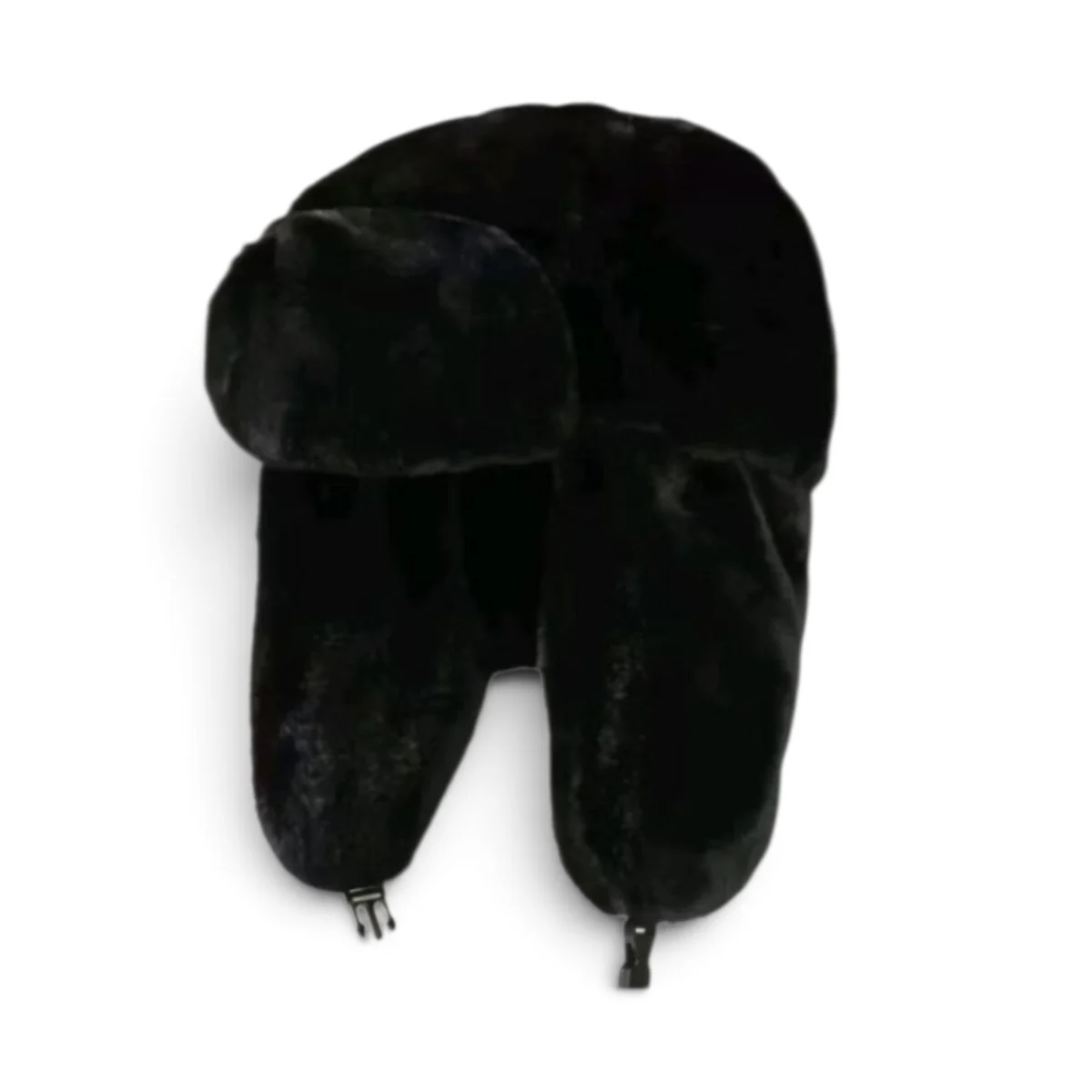
Classic black ushanka: crown, front flap and ear flaps at a glance. (MOFFLI LABS product photo)
Crown: covers the top of your head; the main warm zone.
Front flap: fold it up to show your forehead or down against the wind. Red-star versions usually put the star here.
Ear flaps: the heart of the ushanka. Up, they are a style statement; down, they keep out the cold.
Back flap: protects the back of your neck, which you really notice when the wind comes from behind.
Ties: tie the ear flaps on top of your head or fasten them under your chin.
A traditional ushanka gets its warmth from thick fur and lining. With a modern fashion ushanka, how warm and windproof it is depends on the actual materials and construction of that hat, so you cannot generalise.
Three ways to wear it
Ear flaps tied on top: sharp and stylish. The go-to look in the city; great with a coat, a work jacket or a puffer.
Ear flaps tied at the back: easy to move in. Clearer view when cycling, carrying things or walking through snow.
Ear flaps down and fastened: warmth first. For cold snaps, strong wind, mountains or a snowy trip abroad.
From army cap to street style: how to choose a modern ushanka
Head size: measure around your forehead and the widest part of the back of your head. Too tight presses on your head; too loose and the ear flaps slip.
Ear flap length: lowered, the flaps should cover your ears completely and ideally fasten under your chin.
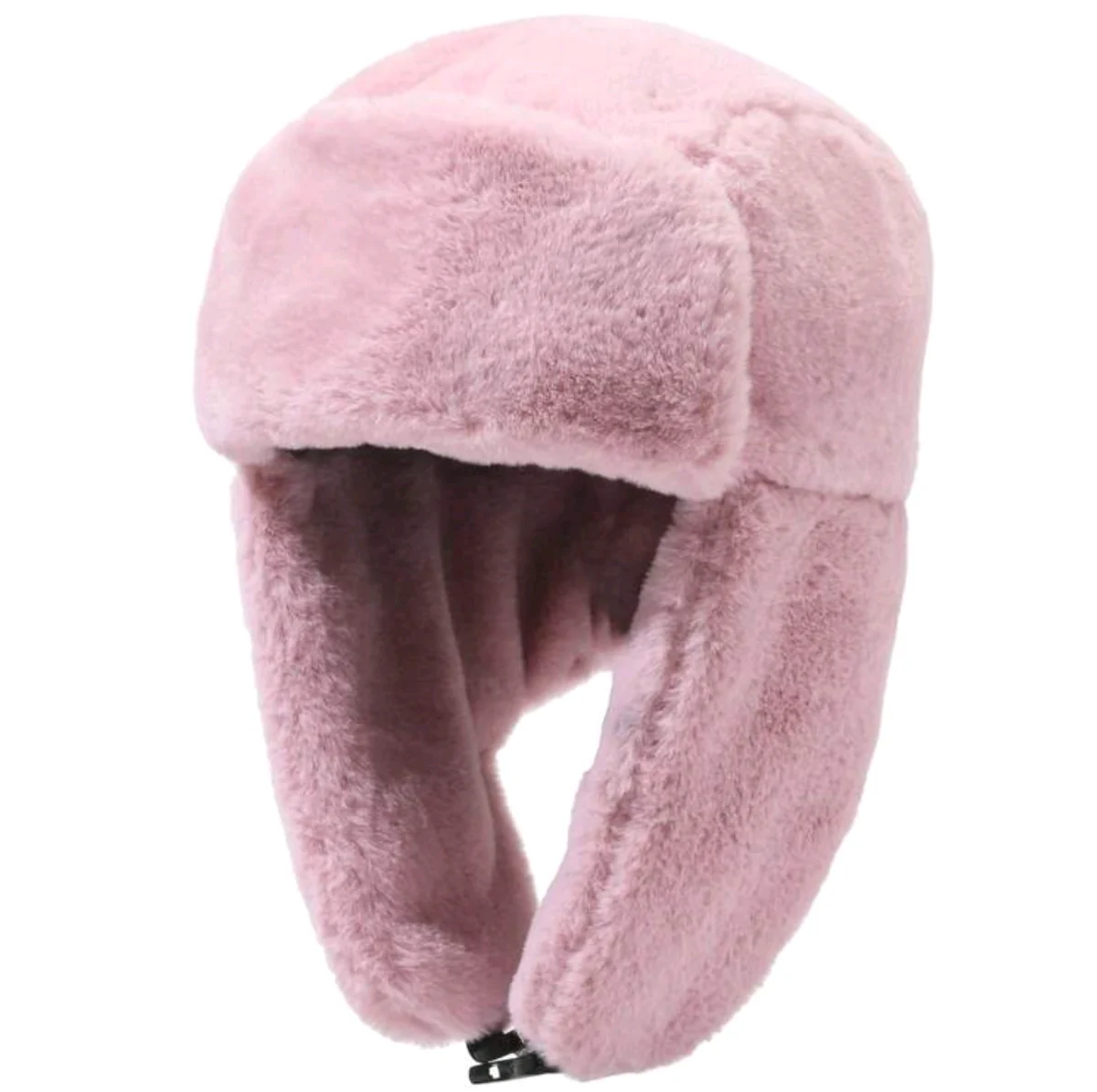
Colour: black goes with everything; grey and cream are softer; light brown feels vintage; pink is for a cuter look; a red star on the front is closest to the classic "Lei Feng hat" image.
Use: for everyday city wear, go lighter; for ski trips or a snowy winter holiday, pick flaps that fasten under the chin.
Material: faux fur needs no animal fur and is easier to care for than real fur. A good choice if you love the classic look and want to be kinder to animals.
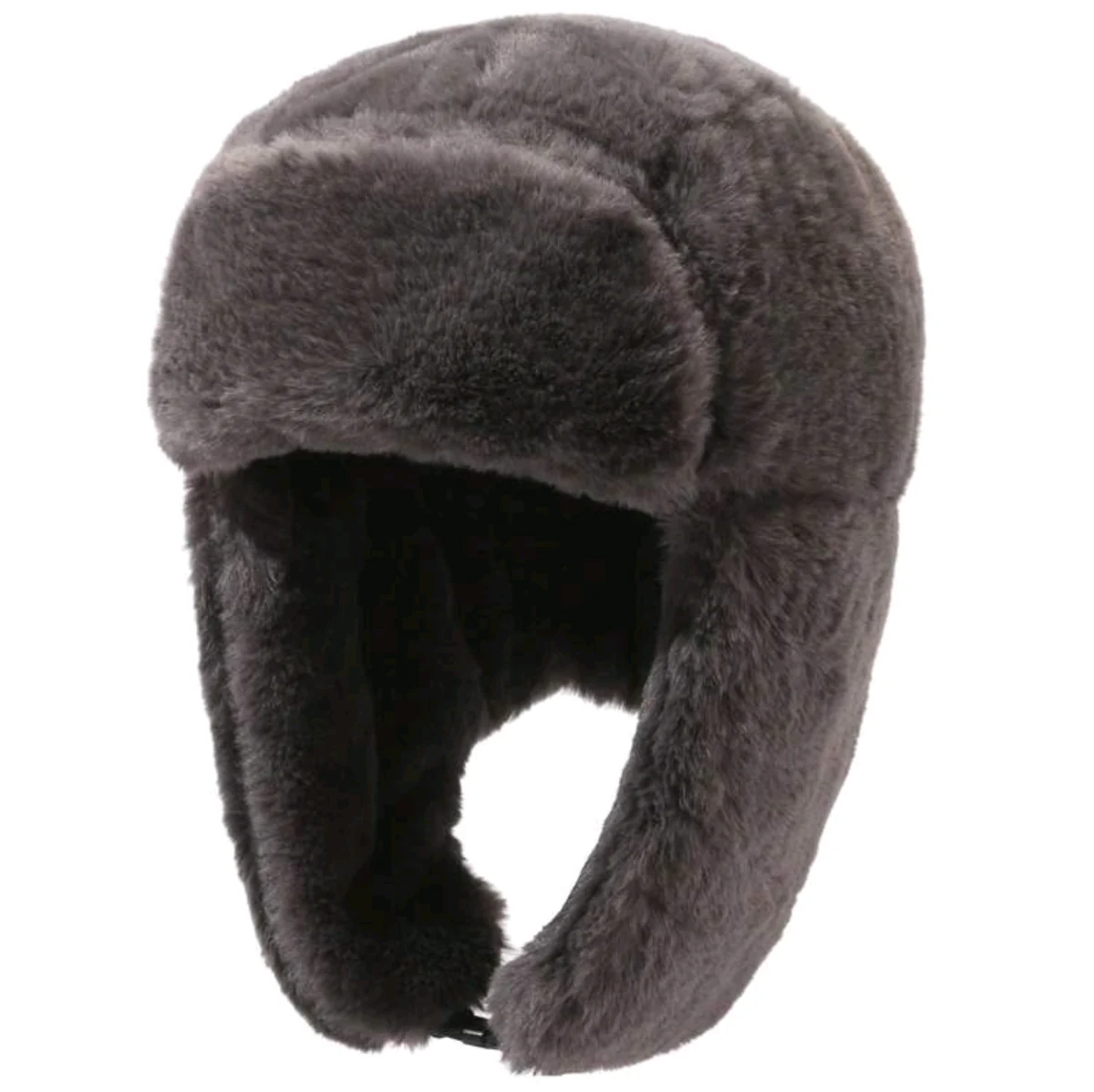
Dark grey is softer than black and easy to pair with coats and puffers. (MOFFLI LABS product photo)
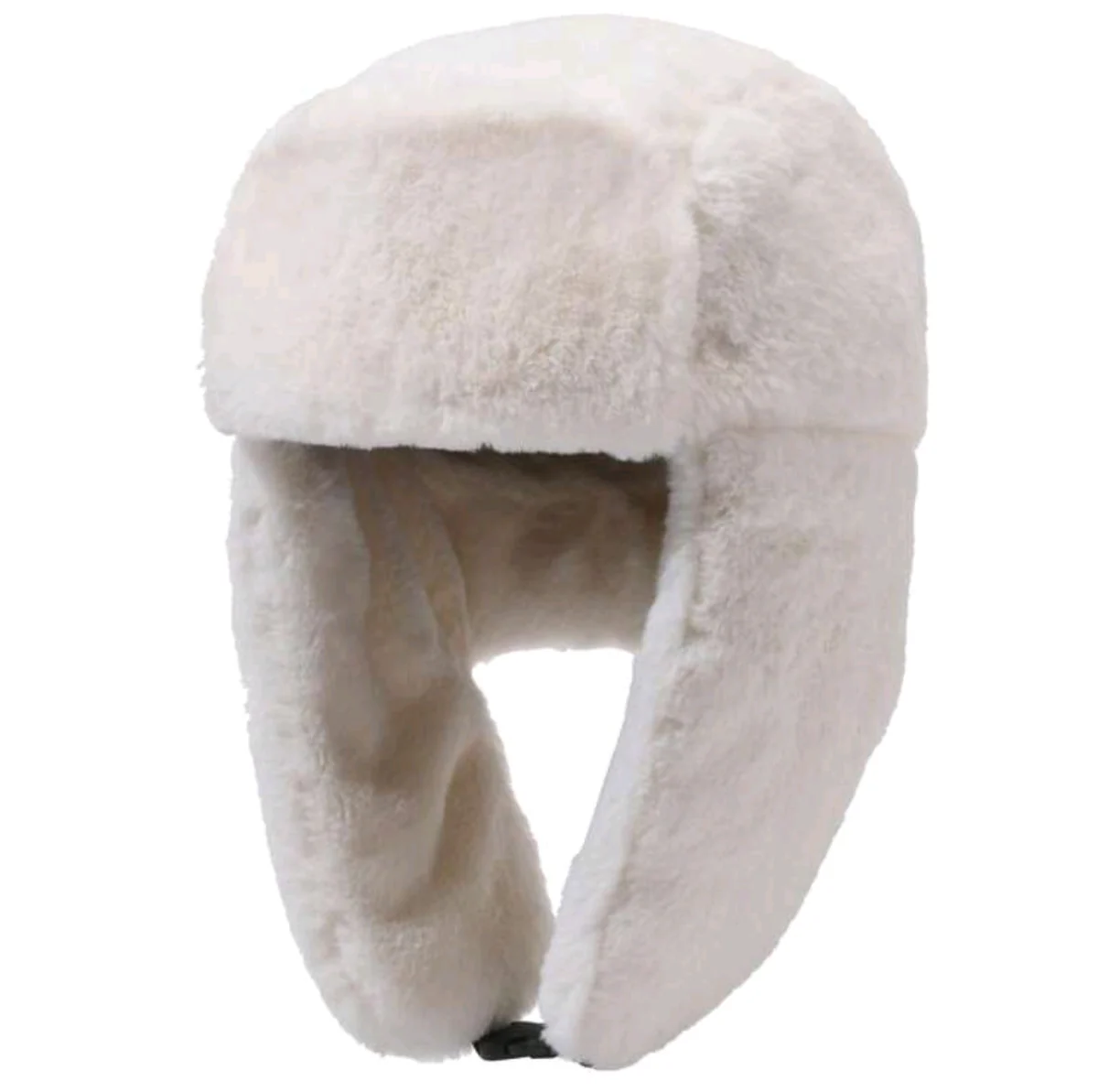
Cream suits light winter outfits and looks great in snowy photos. (MOFFLI LABS product photo)
The MOFFLI LABS ushanka: 100% polyester faux rabbit fur
We sell this style ourselves: 100% polyester faux rabbit fur, with ear flaps you can tie up or let down, one size that fits head circumferences of roughly 56–60 cm. Colours include classic black, dark grey, cream, light brown, pink, and a black version with a red star on the front.
To be clear: this is a modern fashion hat inspired by the traditional ushanka. It is not the historical Type 55 army cap or standard issue of any army. Price, colours and stock are shown live on the product card below and on the product page. Delivery destinations and shipping costs are shown at checkout.
When is an ushanka worth wearing?
Cold snaps: your ears feel the cold first, and lowering the flaps makes a big difference.
Mountains and snow: on a ski trip or a winter hike, temperatures can drop well below freezing.
Winter travel: northern winters in places like Hokkaido, Seoul or Northern Europe call for proper ear protection.
Winter outfits: with a coat, leather jacket or puffer, ear flaps tied up make a hat with real personality.
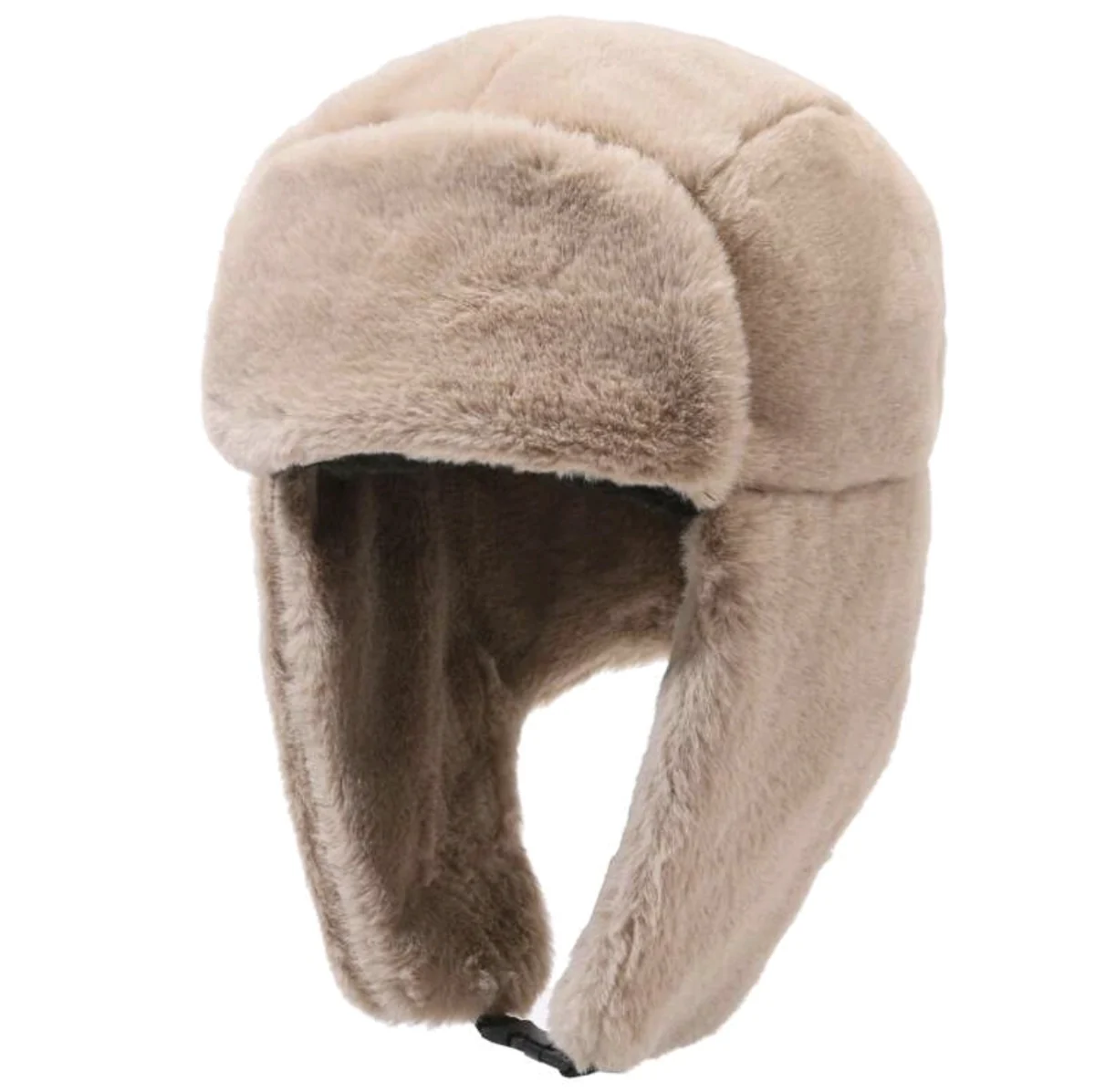
Light brown has a vintage feel and goes well with leather or work jackets. (MOFFLI LABS product photo)
Care and cleaning
Hand wash is safest: gently press in cold water with a mild detergent; do not scrub the fur.
No tumble dryer, no direct sun: blot with a towel, then air-dry in a cool, ventilated spot. Stuff a towel inside to keep the shape.
Brush once dry: comb gently in the direction of the fur with a wide-tooth comb or your fingers to fluff it up.
Storage: keep it in a breathable bag between seasons, with nothing heavy on top.
Conclusion: one hat, one story from the north
The story of the Lei Feng hat starts with the fur ear-flap hats of northern peoples, passes through the Soviet army's ushanka and the PLA's Type 55 winter cap, and, thanks to Lei Feng's photos, ends up with a name of its own in the Chinese-speaking world. Today it is not just a way to keep warm but one of the most recognizable winter looks.
About the photos: all photos in this article are our own product photos of MOFFLI LABS ushankas, not historical photos. We have not reproduced historical photos of Lei Feng because their copyright and licensing status could not be confirmed; you can find them through the sources above.
Where can I buy an ushanka?
You can buy it directly from MOFFLI LABS: the product cards in this article take you to the product page and cart. Delivery destinations and shipping costs are shown at checkout.